Training
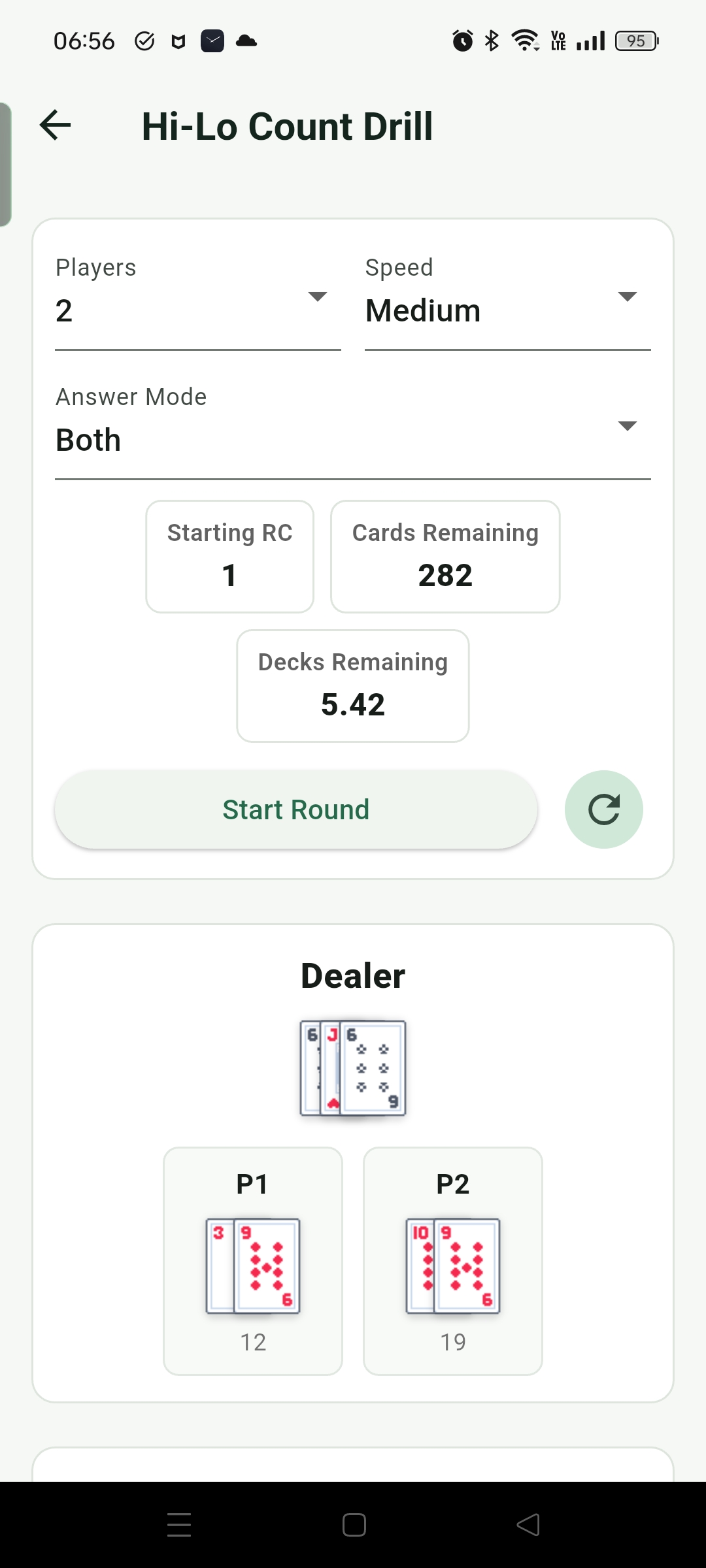
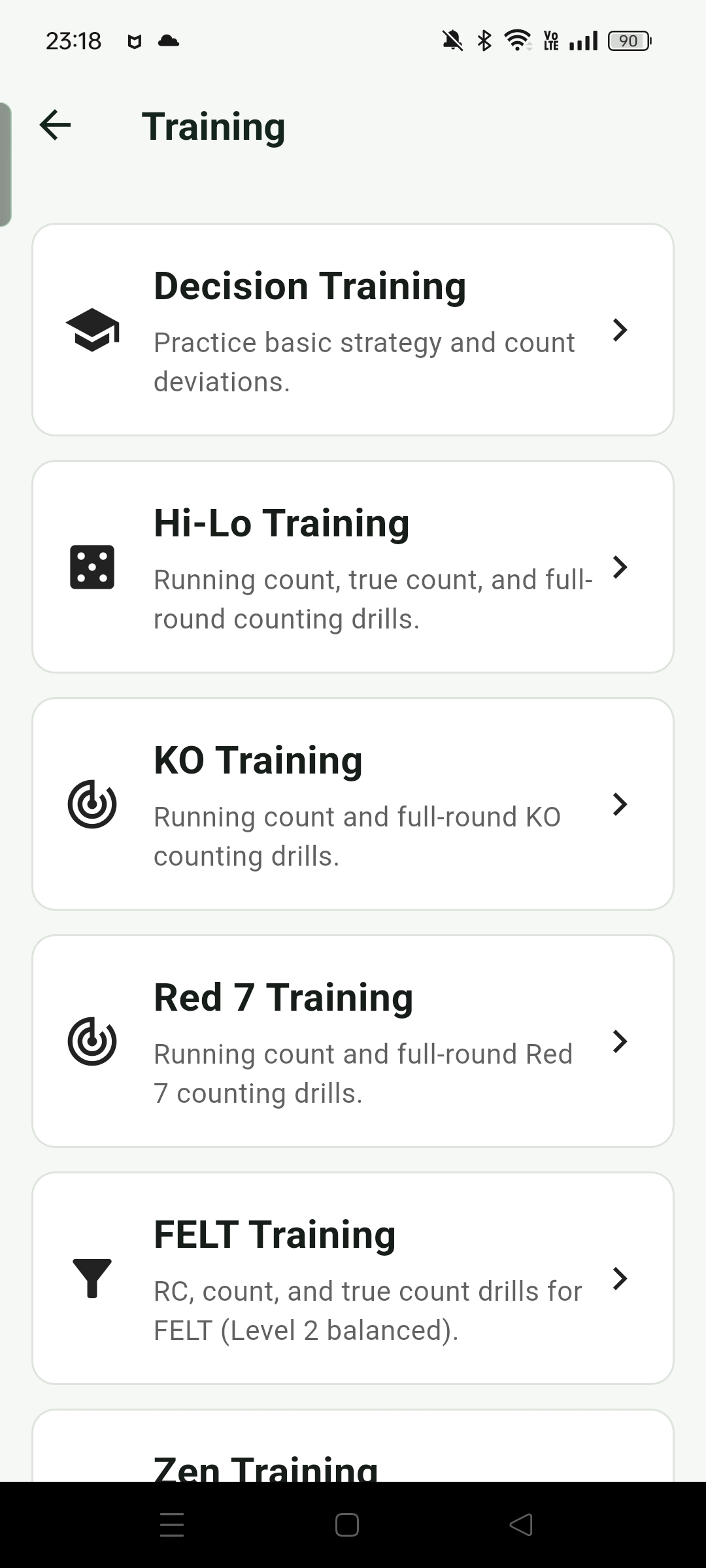
Training mode separates the core blackjack skills: decisions, Running Count, True Count conversion, and realistic full-round counting drills. Supports seven counting systems — Hi-Lo, KO, Red 7, FELT, Zen, Hi-Opt I, and Omega II — each with its own dedicated training menu.
Training Overview
Decision Training
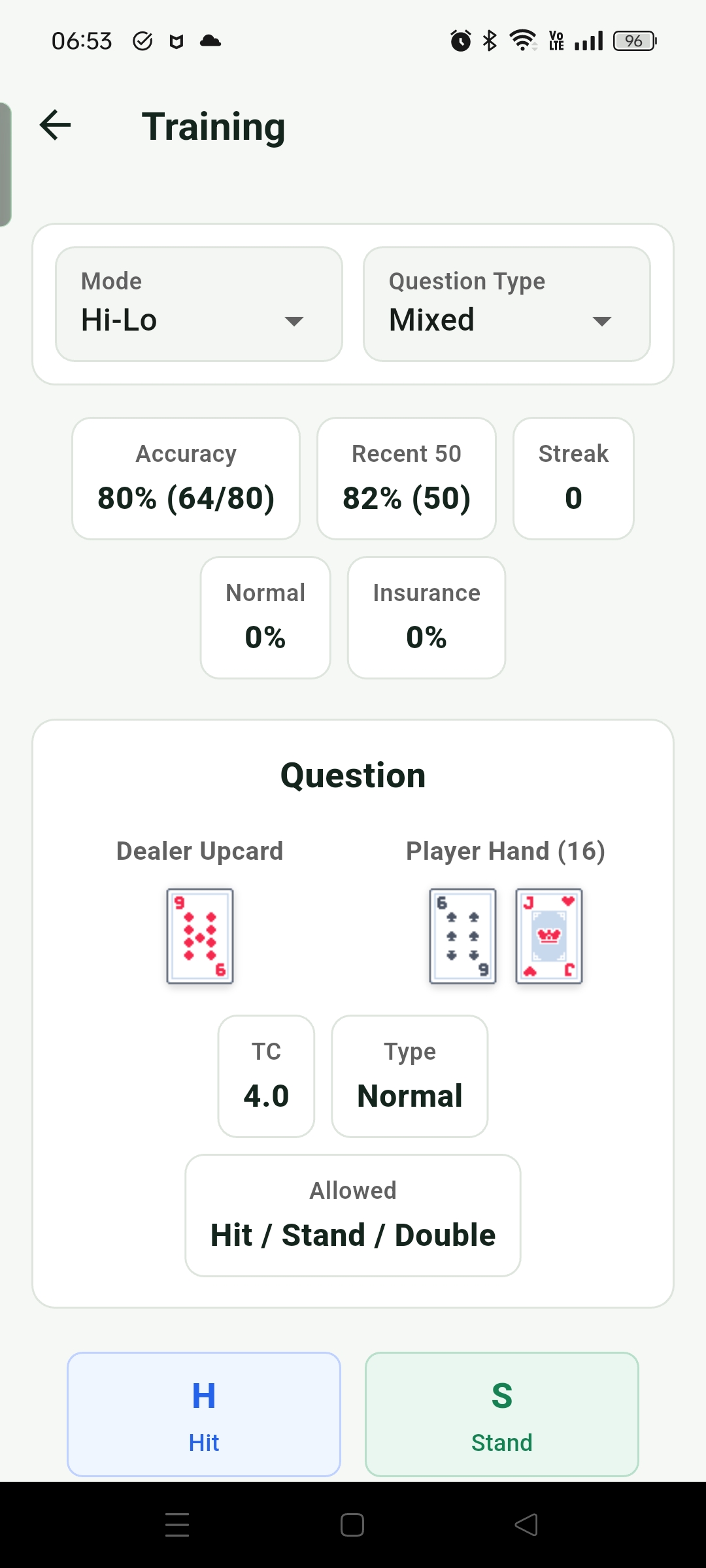
Decision Training focuses on blackjack decisions themselves, including ordinary basic-strategy decisions and deviations that only appear after counting. The Mode control at the top can switch between Basic, Hi-Lo, KO, Red 7, FELT, Zen, Hi-Opt I, or Omega II, so the same type of hand can be practiced under different evaluation modes. You can also pair it with a custom strategy profile.
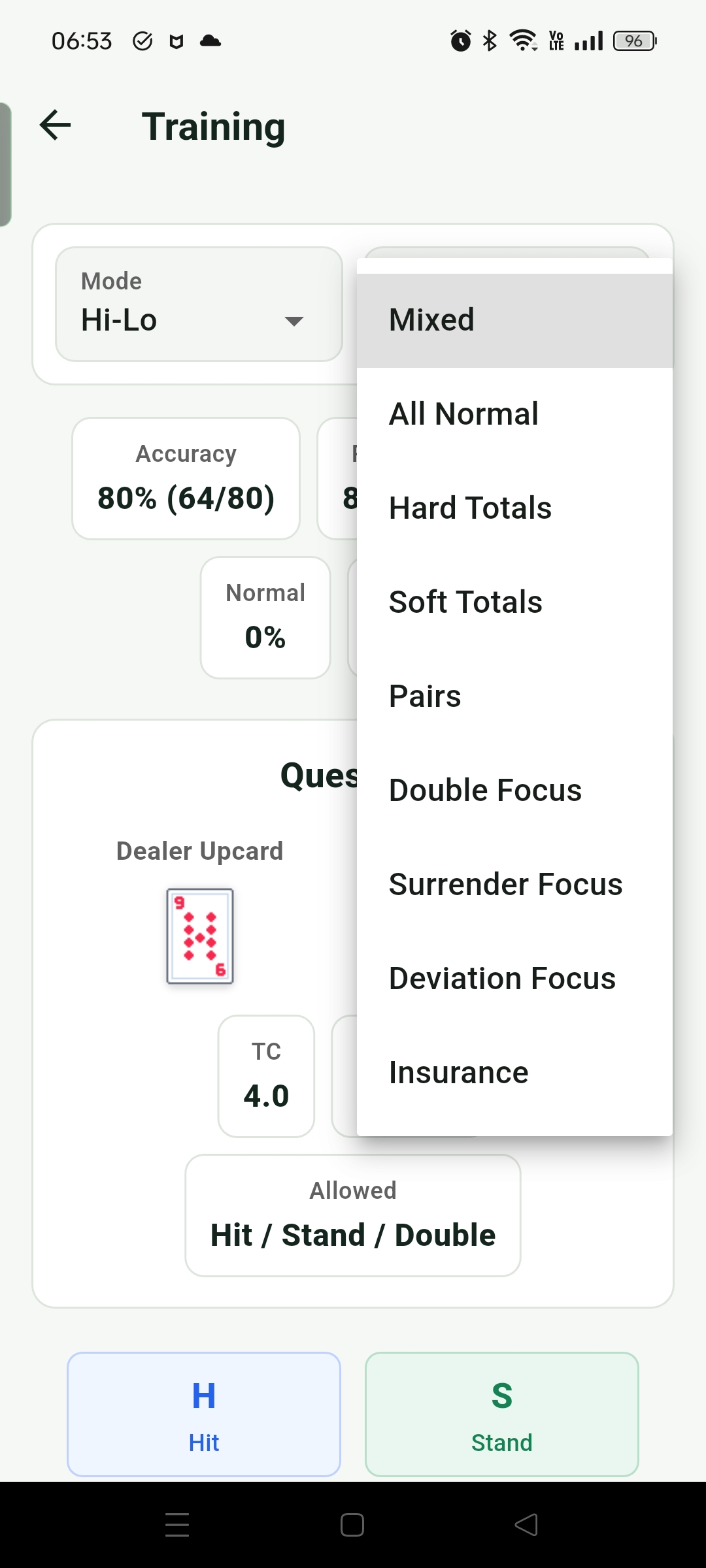
In real play, some deviations, Insurance spots, or specific pair situations appear very rarely. Free practice may not surface them often, which makes them easy to forget. Question Type lets you choose categories such as Deviation, Pair, Insurance, hard hands, soft hands, doubles, or surrender, so you can focus on rare situations or strengthen categories where you often make mistakes.
Running Count Drill
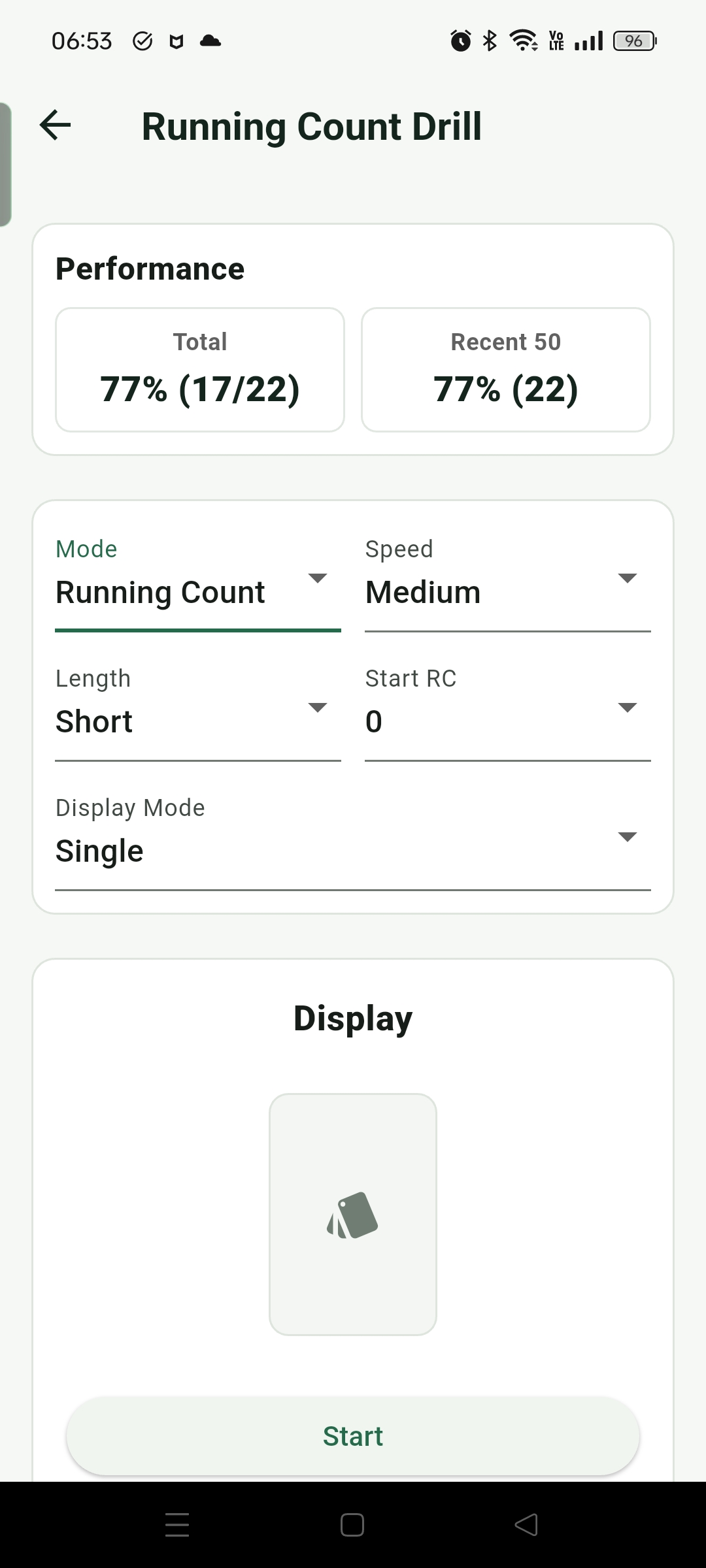
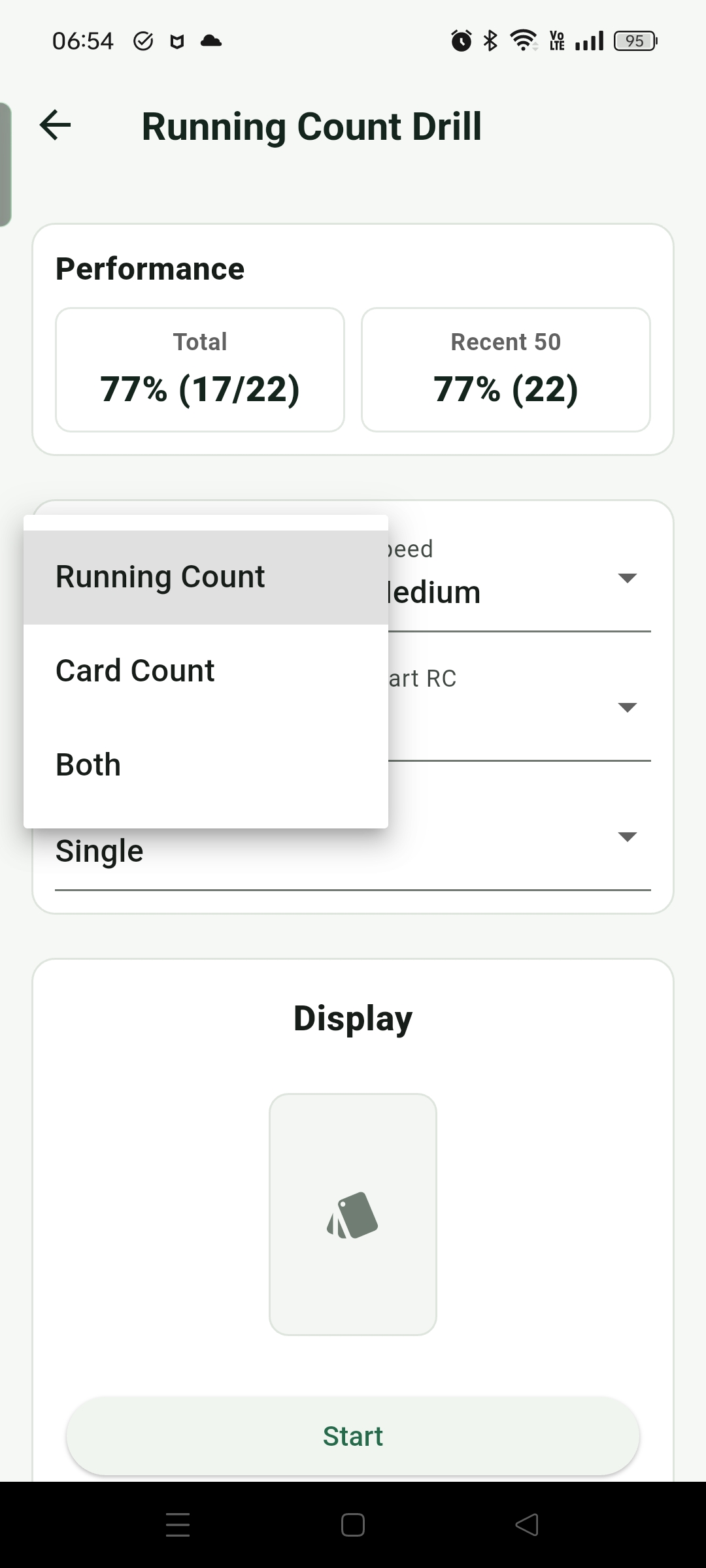
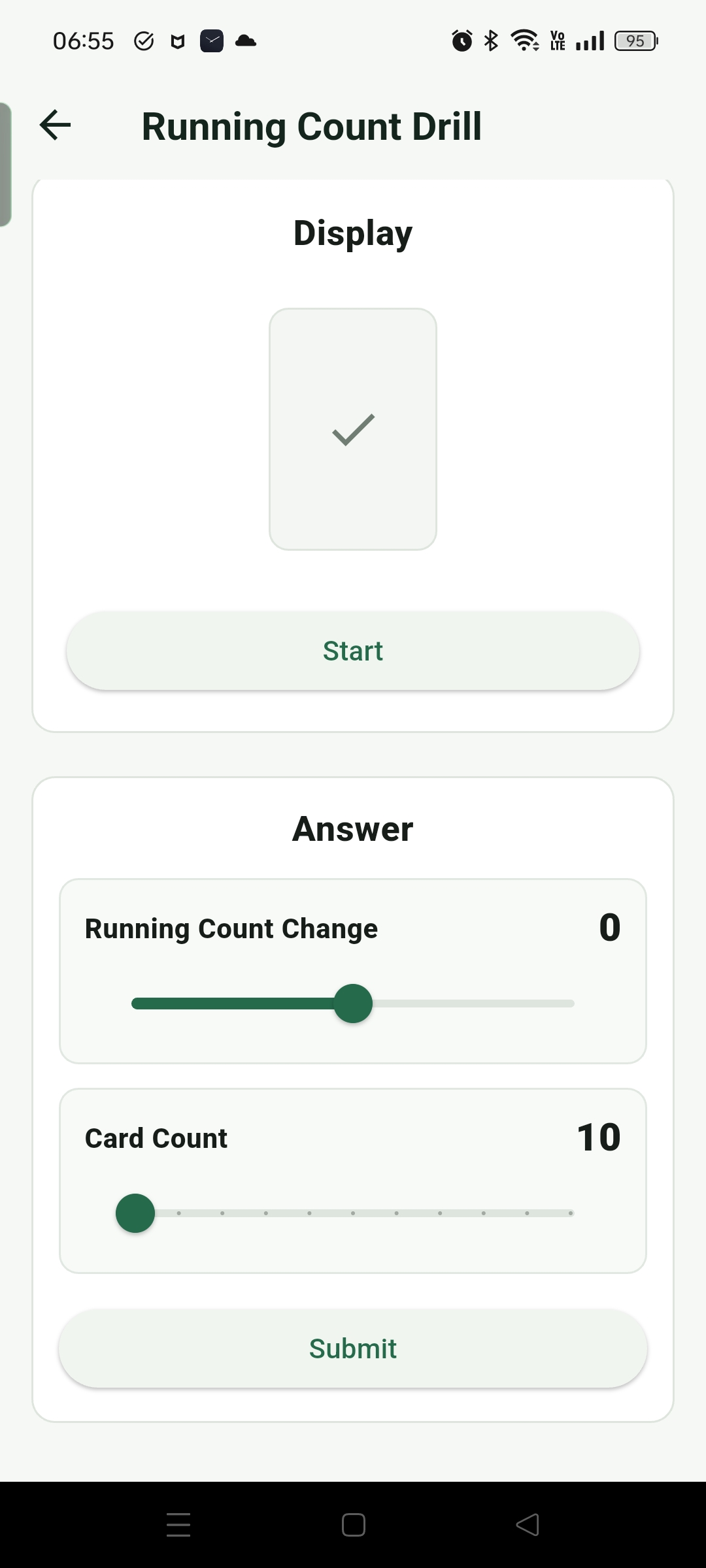
Running Count Drill focuses on the core counting skill: whether you can add the Running Count steadily and quickly as cards appear. All seven counting systems have their own RC Drill with system-specific card values, but the same drill interface and settings. You can answer only the Running Count, switch to counting how many cards appeared, or practice both at the same time to confirm that you understand not only the count but also the length of the card sequence.
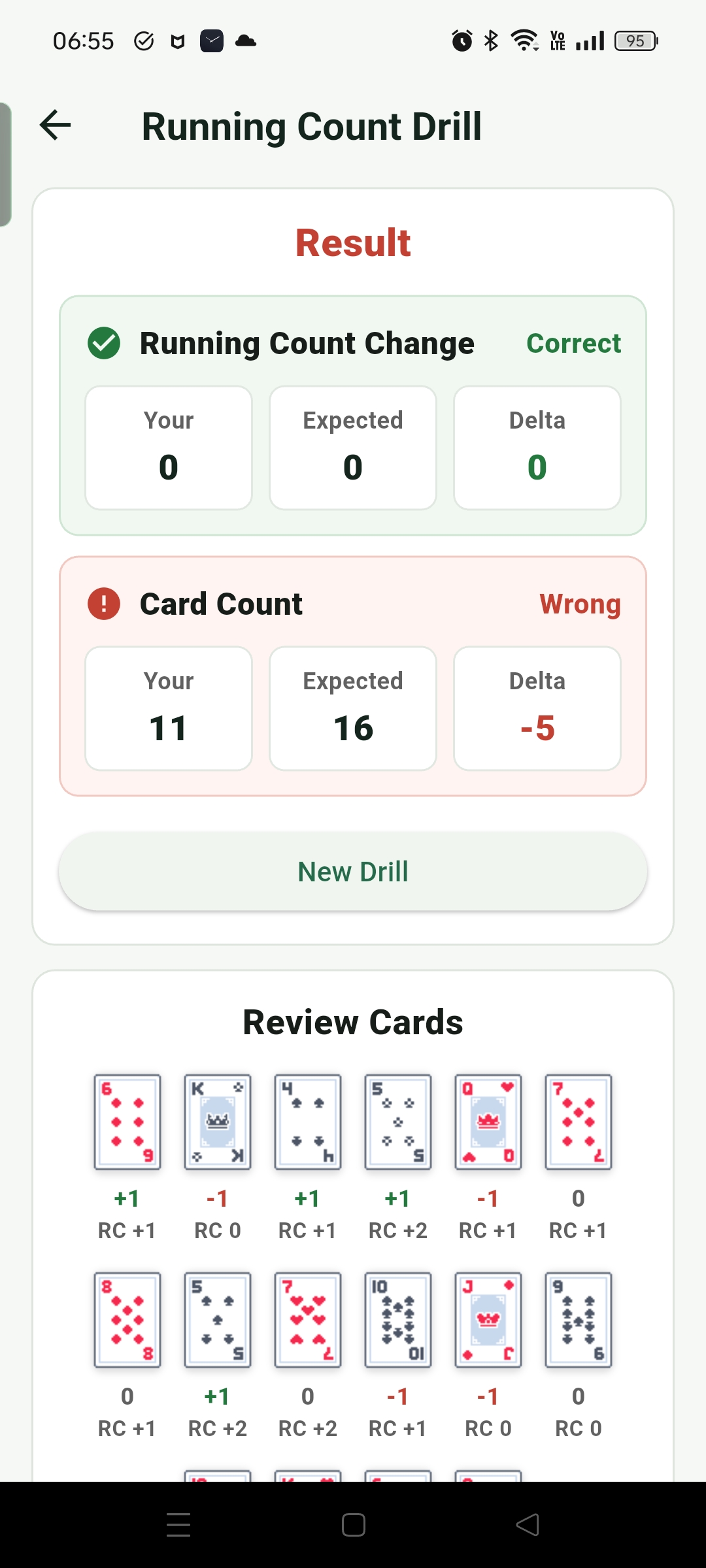
The settings let you adjust card speed and total length, so you can start with short sequences at a slow speed, then gradually make them longer and faster. Starting RC can be fixed at 0 or randomized, which trains continuation from different count states. Card display can be one card at a time, two cards at a time, or random-sized hand groups, making the rhythm closer to a real table where different players receive cards in sequence. After answering, the screen lists all cards that appeared, making it easier to review where a card was missed or added incorrectly.
True Count Drill
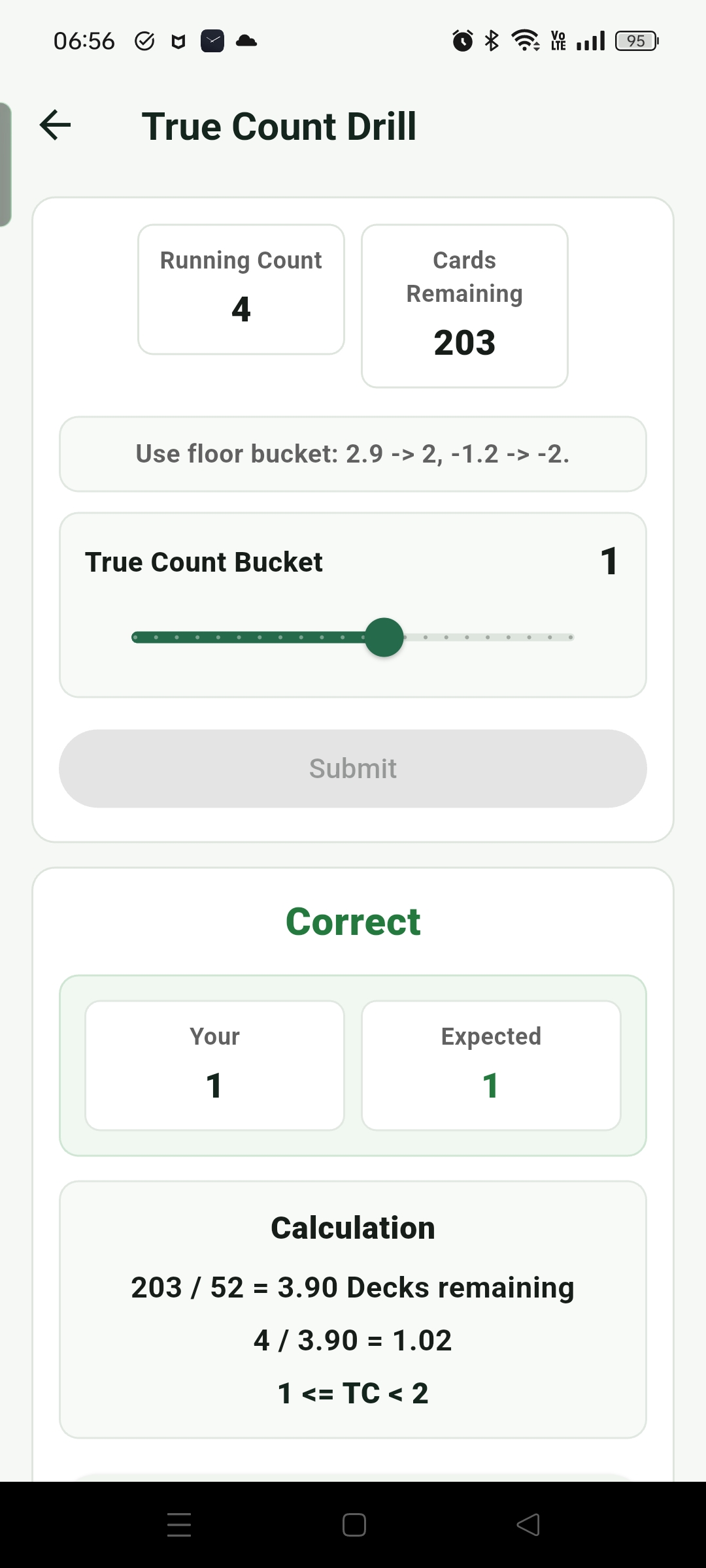
True Count Drill focuses on quickly converting Running Count and remaining cards into True Count. Running Count is only the accumulated result of the current card sequence; the number actually used for bet sizing and some deviations is the True Count after adjusting for remaining decks.
By repeatedly practicing different RC and remaining-card combinations, users can speed up mental calculation and become more comfortable converting count into practical betting decisions during play.
Count Drill
The earlier Running Count Drill and True Count Drill separately practice count accumulation and TC conversion, but they still differ from a real table. Count Drill is closer to actual dealing: it simulates the dealer and multiple players receiving cards in sequence, so users track the count through the rhythm of a full round. Each counting system has its own Count Drill with the corresponding card value logic.
At the start of practice, the app gives a starting Running Count and remaining card count, then simulates one round based on the selected number of players and deal speed. After dealing ends, users answer the final Running Count or remaining cards, checking whether they can maintain a stable count in a rhythm closer to a real table.